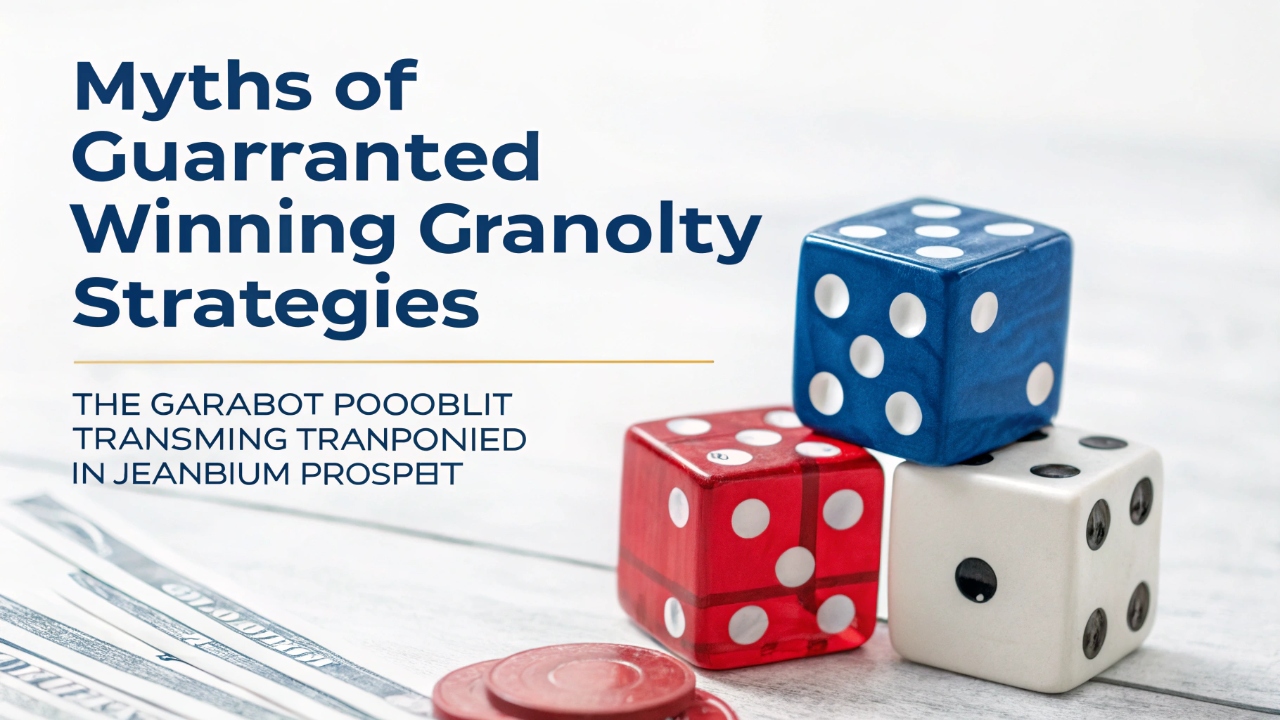
In gambling, the promise of steady profit sounds especially convincing because it appeals to a basic human desire to control randomness. When a player sees several successful sessions in a row, it creates the feeling that a pattern has been found, and any betting system starts to look like a proven method. Most popular schemes marketed as “professional secrets” are built on this effect. But emotional persuasiveness and mathematical validity are not the same thing. Short-term success can happen even with a weak strategy if a player hits a favorable stretch of variance.
Another factor is distorted risk perception. People usually remember vivid wins, while long drawdown periods are pushed out of memory or justified as “incorrect use of the system.” As a result, a person defends the strategy even when the facts suggest otherwise. In the media space, this is amplified by stories about “flawless methods” that barely mention limits, fees, volatility, or psychological pressure. That is why the first step toward a sober evaluation of any method is separating marketing promises from verifiable calculations.
The Most Common Myths and Why They Fail
The most widespread myth is tied to Martingale-style progression systems and their variations. The logic seems simple: sooner or later the needed outcome will occur, so the sequence will recover losses and produce profit. The problem is that in real conditions, players hit bankroll constraints and table limits long before the “inevitable” reversal arrives. Even if a sequence sometimes ends in profit, one long unfavorable run can wipe out the results of many sessions. Expected value does not become positive simply because bet size changes.
Another common myth involves “hot” and “cold” streaks, where past outcomes are treated as signals for the next one. For independent events, this is a cognitive trap: previous spins or hands do not make future outcomes more “due.” Players feel they are reading momentum, while in reality they are replacing probability analysis with noise interpretation. A similar illusion appears in beliefs about “unbeatable” patterns tied to time of day, day of the week, or a specific dealer. These constructs create a sense of control but do not change the game’s fundamental parameters.
A separate myth claims that discipline alone can turn a negative game into a profitable one. Discipline is truly important, but its role is to limit losses and protect bankroll, not to create statistical edge out of thin air. If a player has no objective edge, even perfect rule-following cannot eliminate the operator’s built-in advantage over the long run.
What Actually Works: Risk Management Instead of Chasing Miracles
A realistic approach starts with accepting boundaries. In most gambling formats, guaranteed profit over the long run is impossible if the initial conditions do not provide a player edge. This does not mean every strategy is useless. A strategy becomes useful when it helps control volatility, loss pace, and behavioral errors. In other words, the goal shifts from fantasy about guaranteed profit to managed risk and predictable financial behavior.
Practical value comes from clear bankroll management, predefined session limits, and accurate result tracking without self-deception. When a player works with numbers instead of feelings, the true quality of decisions becomes visible. In this mode, “magic systems” disappear quickly because they fail on large samples. What remains are approaches that reduce the probability of critical drawdowns and help stop on time.
Psychological hygiene also matters a lot. Impulsive attempts to “win it back” usually break even a reasonable plan. If a strategy does not account for emotional triggers, it will fail under pressure. That is why a truly workable model always includes pauses, limits, and clear conditions for ending a session.
How to Tell an Honest Strategy from Manipulation
A reliable method can be recognized by its language and testability. If someone promises “stable profit with no risk,” it is almost certainly marketing, not analytics. An honest approach describes not only potential upside but also loss scenarios, drawdown range, bankroll requirements, and usage limits. It accepts that a short period can be unprofitable even with correct execution and does not replace statistics with emotional arguments.
Manipulative schemes, by contrast, rely on cherry-picked examples and post-fact explanations. When there is a win, it is presented as proof of the system; when losses come, the player is blamed for “not following instructions properly.” This model is convenient for the seller but useless for decision-making. A mature strategy is validated through session logs, sample size, and repeatability of results, not through a polished advertising story.
The main takeaway is simple: in gambling, what works best is not belief in guarantees but competent uncertainty management. The sooner a player accepts this reality, the less they pay for illusions and the more steadily they keep control over money and decisions.